University
Oslo Metropolitan University, Norway
Title of Keynote
Beyond Borders, Within Classrooms: Voices from Blended Mobilities in Teacher Education
Biography
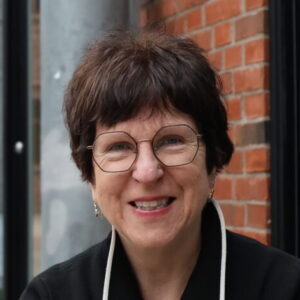
Dina Tsagari, PhD, is Professor, Department of Primary and Secondary Teacher Education, Oslo Metropolitan University, Norway. She has also worked for the University of Cyprus, Greek Open University and Polytechnic University of Hong Kong. Her research interests include language testing and assessment, materials design and evaluation, differentiated instruction, multilingualism, distance education, learning difficulties and inclusive education. She is the editor and author of numerous books, journal papers, book chapters, project reports etc. She coordinates research groups, e.g., CBLA SIG – EALTA, EnA OsloMet and is involved in numerous EU-funded and other research projects (e.g. TEIMO, teff, TREL, SCALED, KIDS4ALL, NORHED, KriT, DINGLE, TRIBES, ENRICH, TALE, DysTEFL, PALM, etc.).
Abstract
In an era where classrooms are increasingly shaped by diversity, mobility has become central to how we prepare teachers for global citizenship and intercultural competence (Beelen & Jones, 2015; Wächter & Maiworm, 2014). Yet, traditional long-term international experiences often remain inaccessible to many due to financial, curricular, and personal constraints. The rise of short-term, hybrid and blended mobility formats—particularly through the Erasmus+ Blended Intensive Programmes (BIPs)—offers new avenues for internationalisation that are both inclusive and sustainable (European Commission, 2023).
This plenary draws on insights from the TEIMO project (Teacher Education across Europe: Innovative Mobility Opportunities, https://teimo.eu/en/), which pilots and evaluates innovative blended mobility models across Europe. Central to this work are the voices from the classroom—students, teacher educators, and institutional partners—who reflect on communication, collaboration, and belonging in digitally- and physically-shared spaces. These perspectives highlight both opportunities and challenges: from fostering genuine intercultural encounters and developing transversal skills, to navigating digital divides and supporting emotional wellbeing.
By bringing together narratives from TEIMO BIP courses with broader research in internationalisation, I argue for a redefinition of mobility—not as a privilege for the few, but as an embedded, flexible, and diverse experience within teacher education. This shift calls for listening to students’ and teachers’ voices in shaping mobility design, embedding intercultural learning across curricula, and leveraging technology to create scalable and inclusive opportunities for all. Ultimately, the plenary seeks to spark dialogue on how internationalisation and mobility can move from being an ‘add-on’ to becoming a core principle of equitable teacher education in Europe and beyond.
References
Beelen, J., & Jones, E. (2015). Redefining internationalization at home. In A. Curaj et al. (Eds.), The European Higher Education Area (pp. 59–72). Springer.
European Commission (2023). Blended Intensive Programmes under Erasmus+. https://wikis.ec.europa.eu/spaces/NAITDOC/pages/95553249
Wächter, B., & Maiworm, F. (2014). English-taught programmes in European higher education. Lemmens.